Live captions and translation across Rotterdam during World Port Days
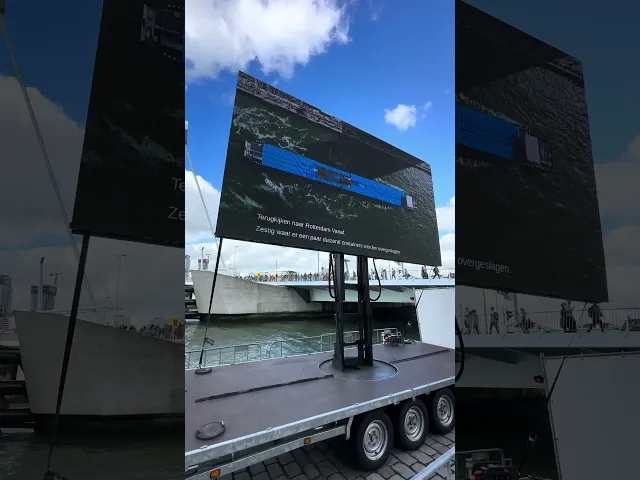
During World Port Days 2026, Soundshape was used to make the live programme more accessible. Captions were shown throughout the weekend on screens across the event in Rotterdam. Visitors could also use QR codes to follow the live captions and translations on their own phones.
For us, it was a special deployment to see in practice. Not only because of the scale, but especially because Soundshape became part of the existing event production. Visitors could read the live commentary, while international visitors could follow the programme more easily in their own language.
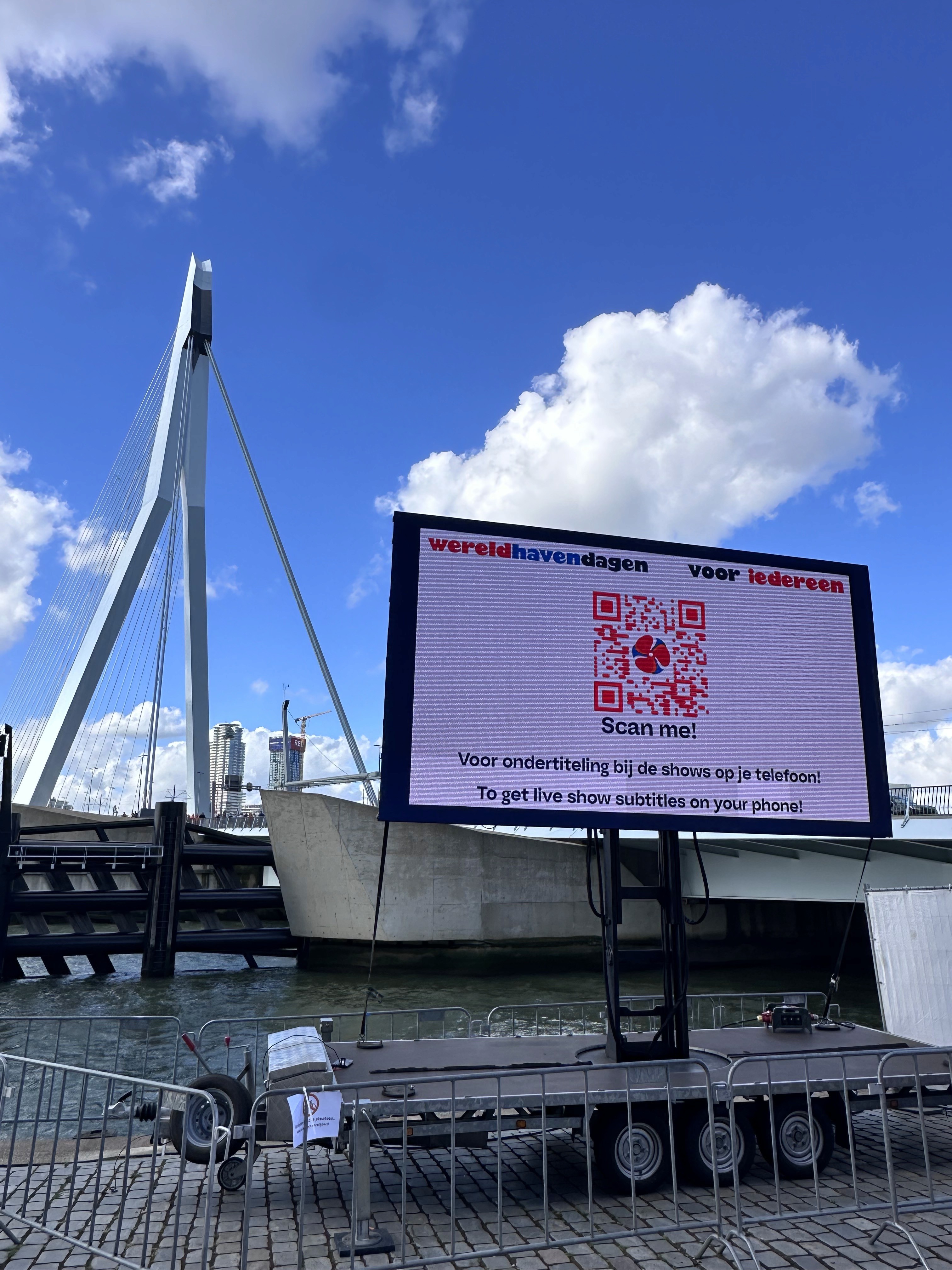
Live commentary directly on screen
Throughout World Port Days, shows and demonstrations take place on the water. The live commentary gives visitors context about what is happening.
With Soundshape, that spoken commentary was converted into text in real time. Our partner BYMOBI integrated the output into the video production, allowing the captions to be displayed on screens across the event.
For deaf and hard-of-hearing visitors, this meant that an important part of the programme became easier to follow. They did not need to go to a separate location or use a separate accessibility service. The information was available directly on the same screens the rest of the audience was already watching.
Also available via QR codes
In addition to the event screens, visitors could access Soundshape via QR codes placed around the venue.
This did more than make the programme more accessible for people who could not easily hear the spoken content. It also allowed international visitors to follow the commentary more easily in a language they understood.
Soundshape supports live translation in more than 100 languages. Visitors can follow what is being said on their own smartphone, without the need for a separate screen for every language.
This is especially useful at large events with a diverse audience. The same spoken source can be used for captions on central screens and for translated content on personal devices.
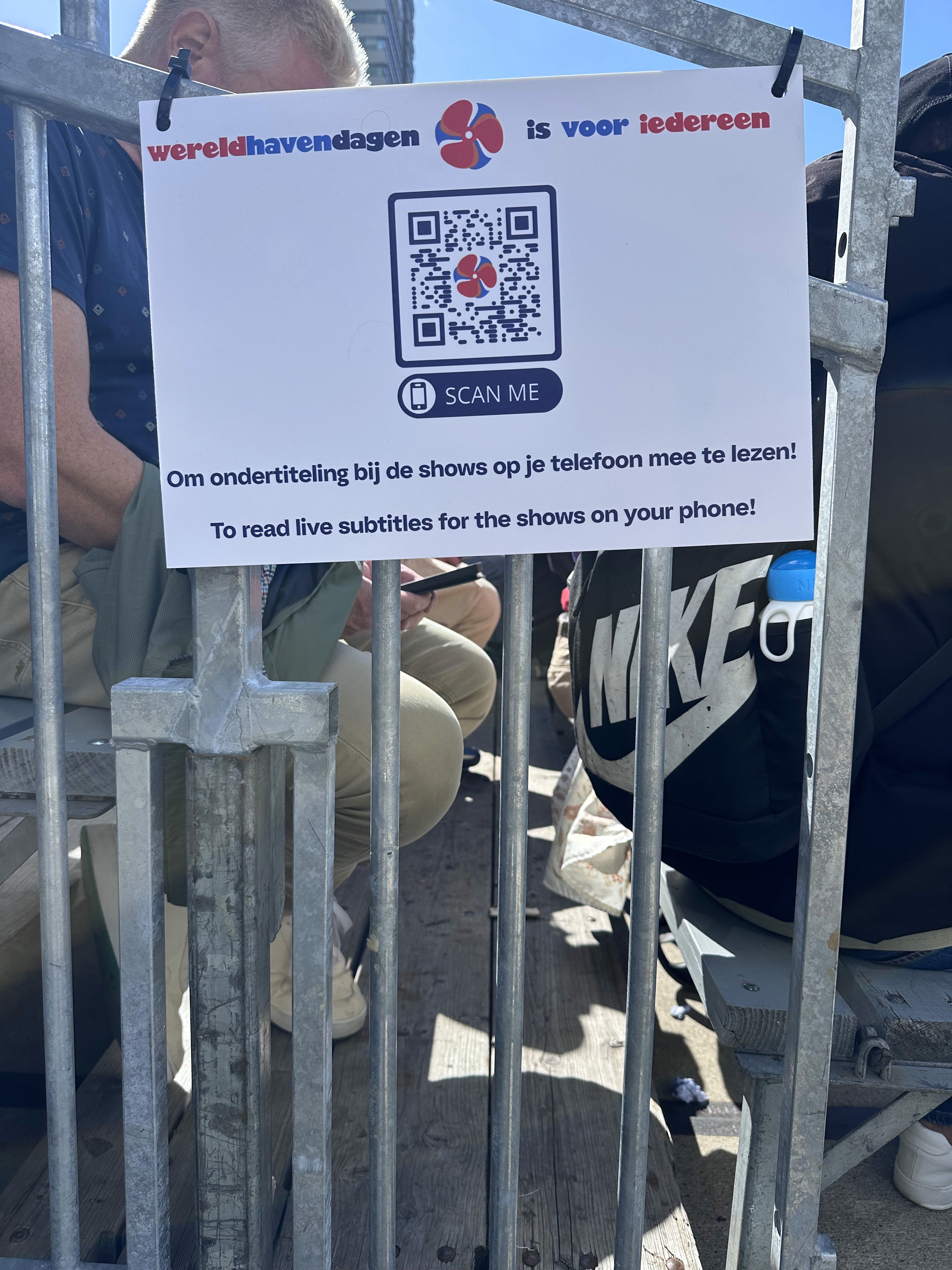
Part of the existing production
The captions and translations were not a separate layer added alongside the event. They became part of the way information was already being shared with visitors.
The screens were already there. The video production was already there. Soundshape added live text and translation to that existing setup.
For event organisers and AV partners, this makes the solution practical to deploy. Soundshape can be added to an existing AV workflow without requiring the entire event to be built around the technology.
Want to see how live captions and translation can be added to your existing AV setup? Request a Soundshape demo.
From event screens to visitors’ own phones
World Port Days does not take place in a single venue or around one stage. The event stretches across multiple locations along the Nieuwe Maas, with visitors following the programme from different areas.
That is where Soundshape’s flexibility becomes clear.
The output is not tied to a single screen. Captions can be integrated into the existing video production, while visitors can use a QR code to access the same content on their own phones.
The same approach can be used at conferences, corporate events, government events, international conferences and other events where accessibility or multiple languages play an important role.
A major event in our own city
World Port Days attracted an estimated 380,000 visitors in 2026.
That meant Soundshape was running throughout an entire weekend as part of a large-scale live production, with a large audience, multiple programme elements and screens spread across the event.
And all of this happened in Rotterdam, our own city.
For us, this deployment shows that live captions and translation do not have to be limited to a single room or screen. With one solution, spoken content can be made accessible in different places, from large event screens to an individual visitor’s smartphone.
During World Port Days, more people were able to follow what was being said live, whether hearing or language would normally have created a barrier.