One Room, 100+ Languages: How Soundshape Helps Every Voice Be Understood
Picture this: a keynote speaker walks onto the stage. The room is full. Some visitors are local. Others have travelled from across Europe, Asia, Africa or the Americas. Some people hear every word clearly. Others prefer to read along. Some are deaf or hard of hearing. Some understand the speaker’s language perfectly, while others are quietly translating in their heads.
That is the reality of many events today.
Audiences are more international, more diverse and more digitally connected than ever. And that creates a simple but important question for every event organizer:
How do you make sure everyone can follow what is being said?
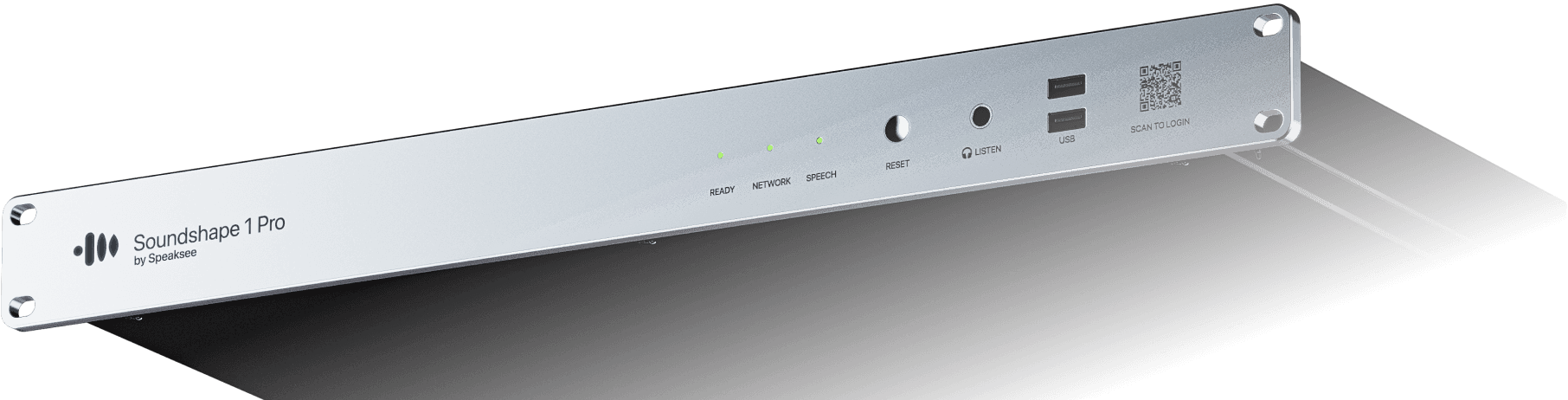
That is where Soundshape comes in.
Soundshape helps make live communication more accessible, understandable and inclusive. With real-time captions and translation, visitors can follow spoken content on their own smartphone, tablet, in-room screens or livestreams. No complicated setup for the audience. No need to choose who gets included. Just a clearer way for more people to take part.
And because language is never one-size-fits-all, Soundshape supports 142 language and dialect variants across speech-to-text, real-time translation and custom dictionary features.
Why 100+ Languages Makes a Real Difference
At first, “100+ languages” sounds like a big number. Impressive, yes. But the real value is not the number itself.
The value is the visitor who can finally follow a presentation in their own language. The international guest who no longer misses the nuance. The student who can read along. The attendee who is hard of hearing and can stay fully engaged. The organizer who can welcome a broader audience without turning accessibility into a complex side project.
Live events move fast. Speakers do not pause after every sentence to check whether everyone understood. That is why live captions and translations can make such a practical difference. They give people another way in.
From Global Conferences to Local Meetings
A multilingual audience is not only found at large international conferences. It can be a city council meeting, a theatre performance, a university lecture, a corporate town hall, a product launch or a livestream with online viewers from different countries.
In all of these settings, language can either become a barrier or a bridge.
Soundshape helps organizations choose the bridge.
With support for widely used global languages, regional variants and local dialects, Soundshape makes it easier to include people as they are: with different languages, hearing needs and ways of following live content.
The Languages and Variants Soundshape Supports
Soundshape supports the following languages and language variants for live captions, translation and related language features:
Afrikaans (South Africa) [af-ZA], Amharic (Ethiopia) [am-ET], Arabic (United Arab Emirates) [ar-AE], Arabic (Bahrain) [ar-BH], Arabic (Algeria) [ar-DZ], Arabic (Egypt) [ar-EG], Arabic (Israel) [ar-IL], Arabic (Iraq) [ar-IQ], Arabic (Jordan) [ar-JO], Arabic (Kuwait) [ar-KW], Arabic (Lebanon) [ar-LB], Arabic (Libya) [ar-LY], Arabic (Morocco) [ar-MA], Arabic (Oman) [ar-OM], Arabic (Palestinian Authority) [ar-PS], Arabic (Qatar) [ar-QA], Arabic (Saudi Arabia) [ar-SA], Arabic (Syria) [ar-SY], Arabic (Tunisia) [ar-TN], Arabic (Yemen) [ar-YE], Azerbaijani (Latin, Azerbaijan) [az-AZ], Bulgarian (Bulgaria) [bg-BG], Bengali (Bangladesh) [bn-BD], Bengali (India) [bn-IN], Catalan [ca-ES], Czech (Czechia) [cs-CZ], Welsh (United Kingdom) [cy-GB], Danish (Denmark) [da-DK], German (Austria) [de-AT], German (Switzerland) [de-CH], German (Germany) [de-DE], Greek (Greece) [el-GR], English (Australia) [en-AU], English (Canada) [en-CA], English (United Kingdom) [en-GB], English (Ghana) [en-GH], English (Hong Kong SAR) [en-HK], English (Ireland) [en-IE], English (India) [en-IN], English (Kenya) [en-KE], English (Nigeria) [en-NG], English (New Zealand) [en-NZ], English (Philippines) [en-PH], English (Pakistan) [en-PK], English (Singapore) [en-SG], English (Tanzania) [en-TZ], English (United States) [en-US], English (South Africa) [en-ZA], Spanish (Argentina) [es-AR], Spanish (Bolivia) [es-BO], Spanish (Chile) [es-CL], Spanish (Colombia) [es-CO], Spanish (Costa Rica) [es-CR], Spanish (Cuba) [es-CU], Spanish (Dominican Republic) [es-DO], Spanish (Ecuador) [es-EC], Spanish (Spain) [es-ES], Spanish (Equatorial Guinea) [es-GQ], Spanish (Guatemala) [es-GT], Spanish (Honduras) [es-HN], Spanish (Mexico) [es-MX], Spanish (Nicaragua) [es-NI], Spanish (Panama) [es-PA], Spanish (Peru) [es-PE], Spanish (Puerto Rico) [es-PR], Spanish (Paraguay) [es-PY], Spanish (El Salvador) [es-SV], Spanish (United States) [es-US], Spanish (Uruguay) [es-UY], Spanish (Venezuela) [es-VE], Estonian (Estonia) [et-EE], Basque [eu-ES], Persian (Iran) [fa-IR], Finnish (Finland) [fi-FI], Filipino (Philippines) [fil-PH], French (Belgium) [fr-BE], French (Canada) [fr-CA], French (Switzerland) [fr-CH], French (France) [fr-FR], Irish (Ireland) [ga-IE], Galician [gl-ES], Hebrew (Israel) [he-IL], Hindi (India) [hi-IN], Croatian (Croatia) [hr-HR], Hungarian (Hungary) [hu-HU], Armenian (Armenia) [hy-AM], Indonesian (Indonesia) [id-ID], Icelandic (Iceland) [is-IS], Italian (Switzerland) [it-CH], Italian (Italy) [it-IT], Japanese (Japan) [ja-JP], Javanese (Latin, Indonesia) [jv-ID], Georgian (Georgia) [ka-GE], Kazakh (Kazakhstan) [kk-KZ], Korean (Korea) [ko-KR], Lao (Laos) [lo-LA], Lithuanian (Lithuania) [lt-LT], Latvian (Latvia) [lv-LV], Macedonian (North Macedonia) [mk-MK], Malayalam (India) [ml-IN], Mongolian (Mongolia) [mn-MN], Marathi (India) [mr-IN], Malay (Malaysia) [ms-MY], Maltese (Malta) [mt-MT], Burmese (Myanmar) [my-MM], Norwegian Bokmål (Norway) [nb-NO], Dutch (Belgium) [nl-BE], Dutch (Netherlands) [nl-NL], Norwegian [no-NO], Polish (Poland) [pl-PL], Pashto (Afghanistan) [ps-AF], Portuguese (Brazil) [pt-BR], Portuguese (Portugal) [pt-PT], Romanian (Romania) [ro-RO], Russian (Russia) [ru-RU], Slovak (Slovakia) [sk-SK], Slovenian (Slovenia) [sl-SI], Somali (Somalia) [so-SO], Albanian (Albania) [sq-AL], Serbian (Cyrillic, Serbia) [sr-RS], Swedish (Sweden) [sv-SE], Kiswahili (Kenya) [sw-KE], Kiswahili (Tanzania) [sw-TZ], Tamil (India) [ta-IN], Tamil (Sri Lanka) [ta-LK], Tamil (Malaysia) [ta-MY], Tamil (Singapore) [ta-SG], Thai (Thailand) [th-TH], Turkish (Türkiye) [tr-TR], Ukrainian (Ukraine) [uk-UA], Urdu (India) [ur-IN], Urdu (Pakistan) [ur-PK], Uzbek (Latin, Uzbekistan) [uz-UZ], Vietnamese (Vietnam) [vi-VN], Chinese (Cantonese, Simplified) [yue-CN], Cantonese (Traditional) [yue-Hant-HK], Chinese (Mandarin, Simplified) [zh-CN], Chinese (Jilu Mandarin, Simplified) [zh-CN-shandong], Chinese (Southwestern Mandarin, Simplified) [zh-CN-sichuan], Chinese (Cantonese, Traditional) [zh-HK], Chinese (Taiwanese Mandarin, Traditional) [zh-TW] and isiZulu (South Africa) [zu-ZA].
Accessibility Should Feel Effortless
The best accessibility solutions do not distract from the event. They support it. They help people feel welcome without making the experience feel complicated.
That is the role Soundshape is designed to play. It works in the background, so the attention stays on the speaker, the message and the audience.
Because when more people can follow the conversation, more people can join it.
And that is what makes an event truly live.